
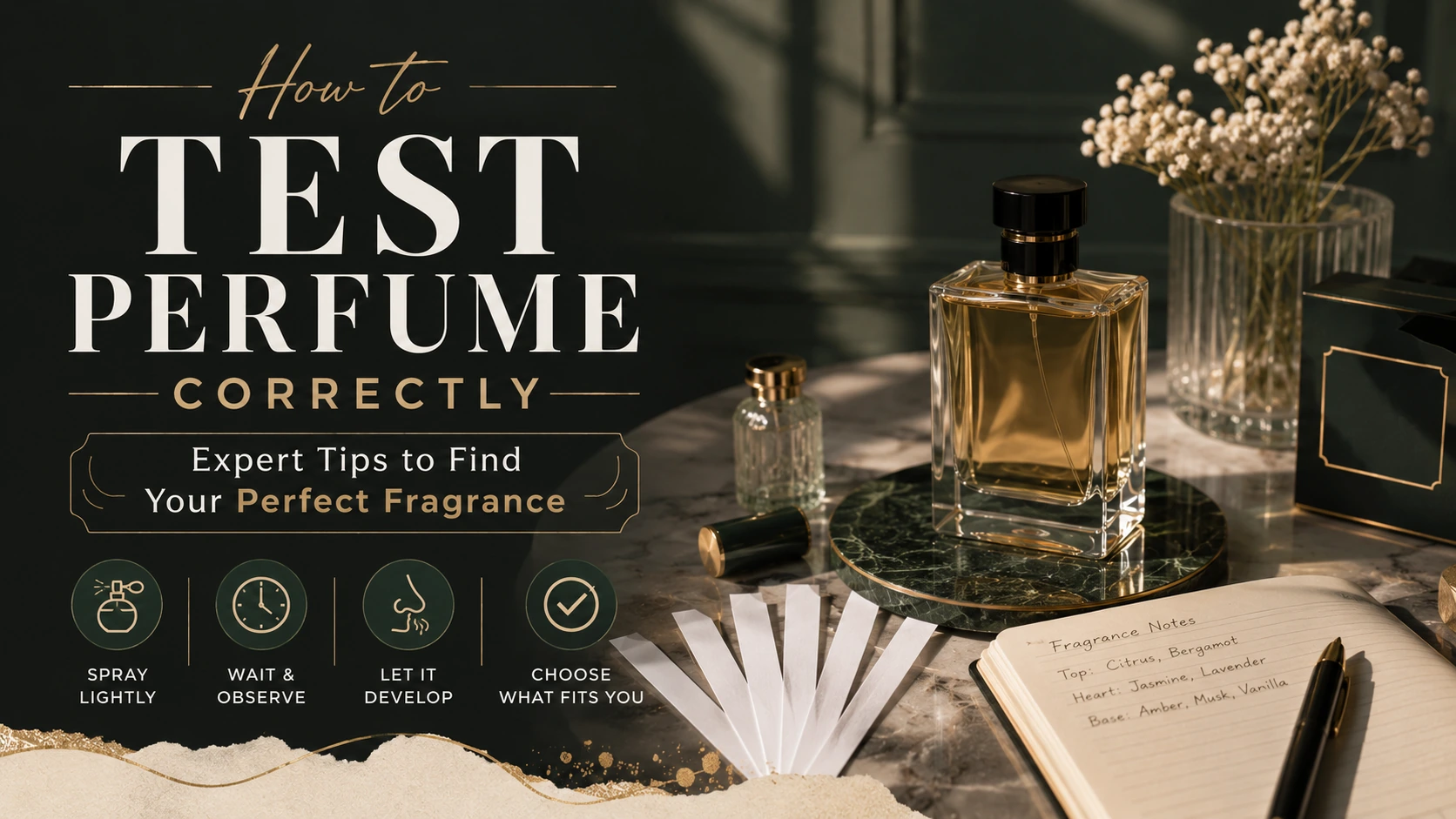
Buying a perfume without testing it properly is one of the biggest mistakes fragrance lovers make. A perfume may smell incredible when you first spray it, but its scent changes over time as different fragrance notes develop. This is why many people regret buying a perfume after wearing it for only a few hours.
Learning how to test perfume correctly helps you understand how a fragrance interacts with your skin, how long it lasts, and whether it truly matches your personality and lifestyle.
Whether you’re buying your first fragrance or adding to your collection, following the right testing method can save you money and help you discover a scent you’ll love wearing every day.
Perfume is designed to evolve in stages. The scent you notice immediately after spraying is only the beginning of the fragrance journey.
Every perfume develops through three distinct layers:
Top notes create the first impression. These are the lightest ingredients and usually evaporate within 5–20 minutes.
Common top notes include:
Although fresh and vibrant, top notes do not represent the perfume’s final scent.
After the top notes fade, the heart notes appear. These form the core personality of the fragrance and typically last 2–4 hours.
Popular heart notes include:
This stage is where you begin to understand whether the perfume suits your taste.
Base notes are the longest-lasting part of a fragrance and provide depth and richness.
Common base notes include:
These notes often remain on your skin for several hours and should play a major role in your buying decision.
Proper preparation ensures you experience the fragrance accurately.
Never wear perfume, body spray, or strongly scented lotion when testing a new fragrance. Existing scents can interfere with the perfume you’re evaluating and make it difficult to judge its true character.
Perfume lasts longer on hydrated skin than on dry skin.
Applying an unscented moisturizer before testing can help the fragrance perform more accurately while preventing the alcohol from evaporating too quickly.
Your sense of smell is generally most sensitive during the morning or early afternoon.
Testing perfumes when you’re not tired or surrounded by strong smells allows you to evaluate fragrances more accurately.
Following a structured testing process helps you understand how the fragrance changes throughout the day.
Start by spraying the perfume once on a paper blotter strip.
Wait about 10–15 seconds for the alcohol to evaporate before smelling it.
This first test helps you decide whether the fragrance is worth trying on your skin.
If you like the opening scent, spray the perfume once or twice on a pulse point such as:
These warmer areas help the fragrance develop naturally.
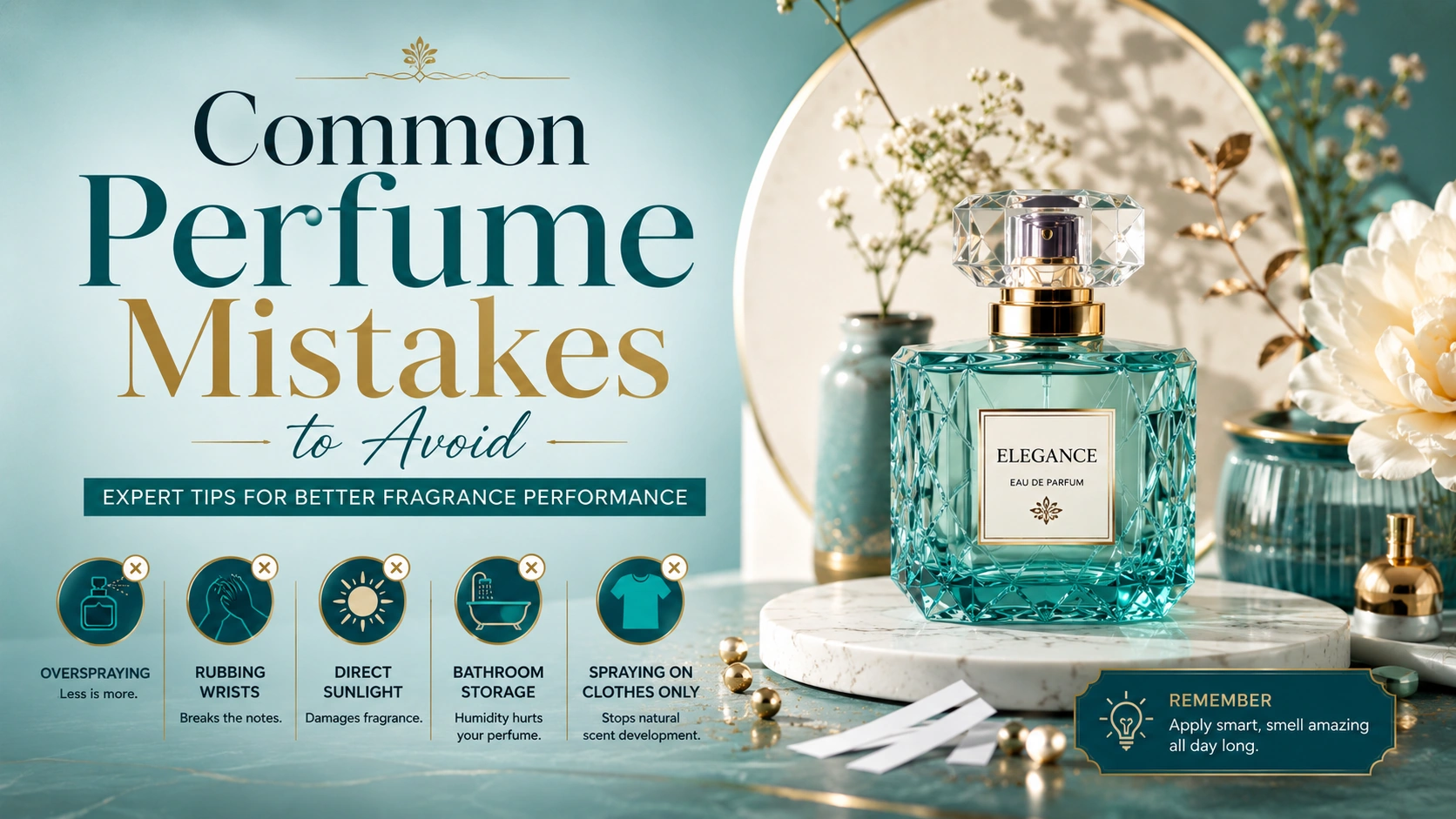
Many people rub their wrists after applying perfume, but this is a common mistake.
Rubbing creates friction and heat, which can disturb the top notes and alter how the fragrance develops.
Instead, let the perfume dry naturally.
Don’t judge a perfume immediately.
Smell it:
This lets you experience the top, heart, and base notes before deciding whether it’s the right fragrance.
Even experienced shoppers sometimes make mistakes that lead to poor purchasing decisions.
Avoid these common errors:
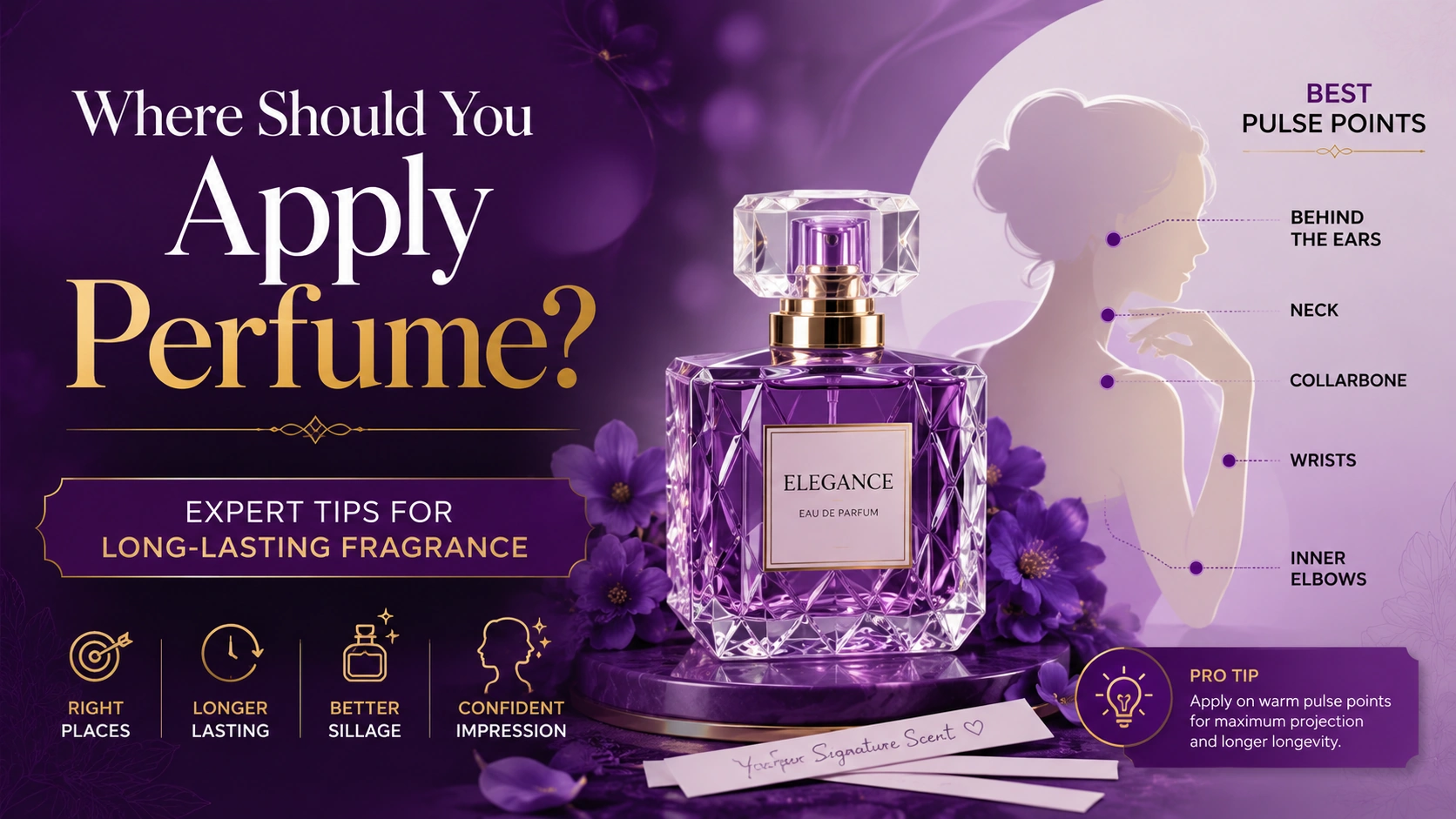
Applying perfume to the right areas of your body allows the fragrance to develop naturally. These areas, known as pulse points, generate more heat, helping the scent evolve through its top, heart, and base notes.
For the most accurate results, apply perfume to:
These areas provide a realistic idea of how the fragrance will smell throughout the day.
Testing perfume on clothing can be useful, but it should never replace testing on your skin.
Expert Tip: Always test on your skin before making a final purchase.
One of the biggest mistakes shoppers make is testing too many fragrances during a single visit.
Ideally, test 2–4 perfumes in one session.
Testing more than this can overwhelm your sense of smell, making it difficult to distinguish between fragrances.
If you’re testing several perfumes, take short breaks between each fragrance.
Helpful techniques include:
Contrary to popular belief, smelling coffee beans doesn’t completely “reset” your nose, although some people find it temporarily refreshing.
Never purchase a perfume after smelling it for only a few minutes.
Immediately After Spraying
After 20–30 Minutes
After 2–4 Hours
After 6–8 Hours
A perfume that smells amazing initially may not be as enjoyable once it fully develops.
Both methods have advantages, and combining them often leads to the best decision.
Many retailers now offer sample sizes or discovery sets.
Your skin plays a major role in how a fragrance performs.
People with oily skin often notice that perfumes:
Natural oils help retain fragrance molecules.
Dry skin tends to absorb fragrance more quickly.
As a result:
Applying an unscented moisturizer before perfume can improve longevity.
Climate also affects fragrance performance.
Hot weather increases evaporation, making perfumes project more strongly but sometimes fade faster.
Choose:
Cool temperatures slow evaporation, allowing richer fragrances to last longer.
Choose:
A fragrance isn’t just about compliments—it should make you feel comfortable and confident.
Good signs include:
If you continue reaching for the fragrance day after day, it’s likely a great match.
Below are some of the most common questions people ask before buying a perfume.
For accurate testing, 1–2 sprays are enough.
Applying too much perfume can overwhelm your sense of smell and make it difficult to evaluate the fragrance properly.
Both methods are useful, but they serve different purposes.
Best Practice: Start with a blotter strip and then test your favorite fragrance on your skin.
Every person’s skin chemistry is unique.
Factors such as:
can all influence how a fragrance develops and how long it lasts.
This is why you should never buy a perfume based only on how it smells on someone else.
Experts recommend wearing a fragrance for at least one full day before purchasing a full-size bottle.
This allows you to evaluate:
If possible, buy a sample or travel-size version first.
No.
Rubbing your wrists creates friction and heat, which can disrupt the natural development of the fragrance.
Instead, spray the perfume and allow it to dry naturally.
Yes.
A fragrance may perform differently depending on temperature and humidity.
Testing your perfume in the season you plan to wear it provides the most realistic experience.
Before purchasing any fragrance, use this simple checklist:
✅ Test no more than 2–4 perfumes in one session.
✅ Start with a blotter strip.
✅ Apply your favorite perfume to clean skin.
✅ Spray only 1–2 times.
✅ Never rub your wrists.
✅ Wait for the fragrance to develop.
✅ Evaluate the perfume after several hours.
✅ Consider your skin type.
✅ Test the perfume in different situations if possible.
✅ Buy from trusted and authorized retailers.
Following these steps will help you make confident decisions and reduce the risk of buying a fragrance you’ll later regret.
Testing a perfume correctly is the key to finding a fragrance you’ll truly enjoy wearing. Rather than making a decision based on the first few seconds after spraying, give the perfume enough time to reveal its complete character.
Always test fragrances on your skin, avoid rushing the process, and consider factors such as your skin chemistry, the weather, and where you’ll wear the perfume.
Whether you’re shopping in-store or online, understanding how perfumes develop will help you choose fragrances that suit your personality, last longer, and provide better value for your money.
A thoughtful testing process leads to smarter purchases—and ultimately, a fragrance collection you’ll love.

Copyright © 2026 Embroze. All Rights Reserved.