
Wearing perfume is more than simply spraying your favorite fragrance before leaving the house. Even the most luxurious perfume can perform poorly if it’s applied incorrectly or stored the wrong way. Surprisingly, many people make simple fragrance mistakes that reduce longevity, weaken projection, or completely change how a perfume smells.
Whether you’re new to fragrances or have been collecting perfumes for years, understanding these common perfume mistakes can help you get the most out of every bottle. In this guide, you’ll learn what to avoid and how to wear your fragrance the right way for better performance and a lasting impression.
A high-quality perfume is an investment. However, incorrect application or storage can prevent it from performing as intended.
Avoiding common perfume mistakes helps you:
Small changes in your fragrance routine can make a noticeable difference.
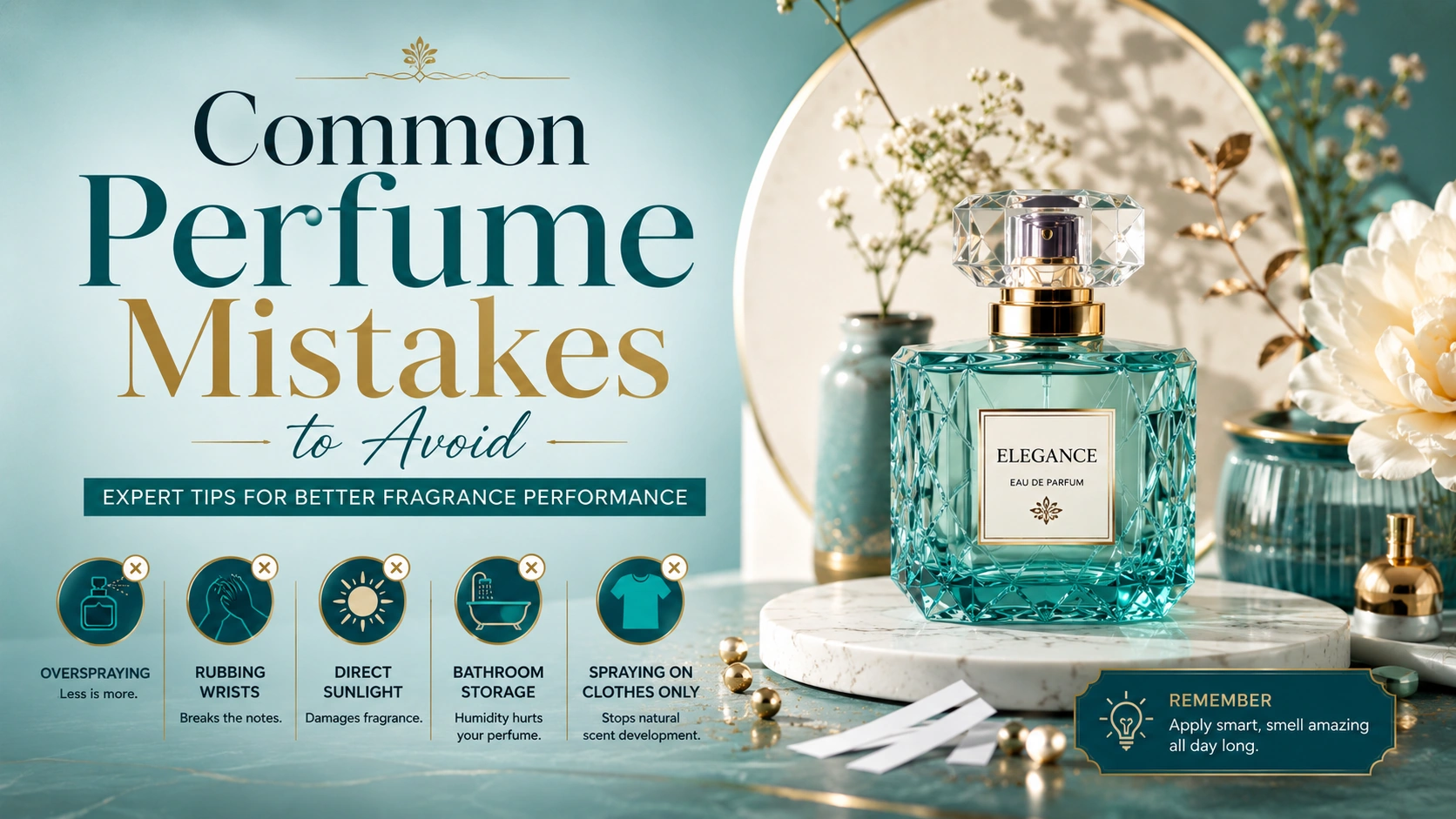
One of the biggest mistakes people make is believing that more perfume means a better scent.
In reality, overapplying fragrance can overwhelm everyone around you and even make it difficult for you to smell the perfume yourself due to nose fatigue.
The ideal number depends on the fragrance concentration.
For offices, meetings, and indoor environments, always apply your fragrance lightly.
This is probably the most common perfume myth.
After spraying perfume on their wrists, many people immediately rub them together. While it may seem harmless, this creates friction and heat that disrupt the delicate top notes.
Instead of rubbing:
This simple habit helps preserve the scent’s intended character.
Many people spray perfume exclusively on clothing because they believe it lasts longer.
While fabric can hold fragrance for an extended period, clothing doesn’t produce body heat. As a result, the perfume won’t evolve through its top, heart, and base notes the way it does on skin.
For the best performance:
This gives you both longevity and natural scent development.
Dry skin absorbs fragrance quickly, causing it to fade much sooner.
If your perfume disappears within a few hours, your skin may be the reason.
Before applying perfume:
Moisturized skin holds fragrance significantly longer.
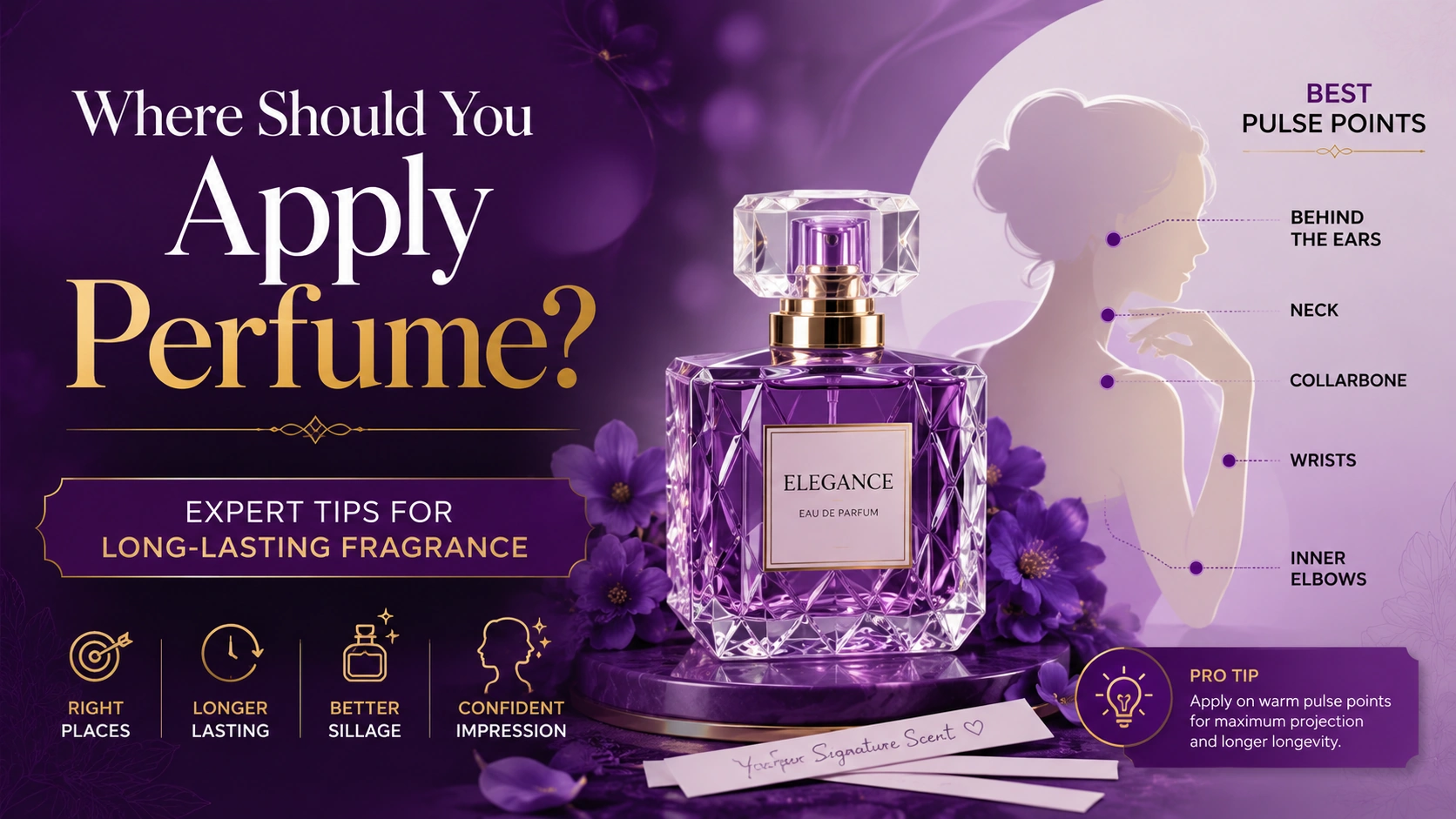
Randomly spraying perfume anywhere on your body reduces its performance.
The best places to apply perfume are warm pulse points, including:
These areas naturally release fragrance throughout the day.
Many people spray perfume just seconds before leaving home.
This doesn’t give the fragrance enough time to settle onto the skin.
Instead:
You’ll notice smoother projection and better longevity.
A fragrance that works perfectly in winter may become overpowering during summer.
Similarly, a heavy oud fragrance may not be appropriate for a small office.
For offices:
For evenings:
For summer:
Choosing the right perfume for the occasion enhances your overall presence.
Mixing multiple unrelated perfumes often creates an unbalanced scent.
Unless you’re intentionally layering fragrances designed to complement each other, avoid wearing several perfumes at the same time.
If you enjoy layering:
One of the biggest mistakes perfume owners make is storing their fragrances in the bathroom.
Although it seems like the most convenient place, bathrooms experience constant changes in temperature and humidity. Steam from hot showers and fluctuating moisture levels can gradually break down the fragrance oils, causing your perfume to lose its original scent.
To keep your fragrance in the best condition:
Proper storage helps preserve both longevity and scent quality for years.
Sunlight is one of the biggest enemies of perfume.
Ultraviolet (UV) rays slowly damage the fragrance molecules, changing the color and scent over time.
You may notice that an old perfume becomes:
Luxury perfume brands use dark bottles for a reason—they help protect the fragrance from light exposure.
Many people shake perfume bottles before spraying because they think it mixes the ingredients.
In reality, perfumes are professionally blended during production and do not need shaking.
Excessive shaking can introduce unnecessary air into the bottle, which may contribute to oxidation over time.
The best practice is simple:
Another common mistake is spraying perfume after putting on expensive clothes.
This increases the risk of staining fabrics such as:
Some fragrance oils leave permanent marks on delicate materials.
Apply perfume first.
Wait a few minutes for it to dry naturally.
Then get dressed.
This protects both your clothing and your fragrance.
Perfume doesn’t always expire quickly, but it doesn’t last forever either.
Most quality fragrances remain in excellent condition for 3–5 years, sometimes even longer when stored correctly.
Watch for these warning signs:
If you notice these changes, it’s usually time to replace the bottle.
Counterfeit perfumes are becoming increasingly common, especially through unofficial online sellers.
Fake fragrances often contain lower-quality ingredients that:
Always purchase from:
Check packaging quality, batch codes, and seller reviews before purchasing.
Not all perfumes are designed to perform the same way.
Many people compare two fragrances without considering their concentration.
Eau de Cologne (EDC)
Eau de Toilette (EDT)
Eau de Parfum (EDP)
Parfum (Extrait de Parfum)
Choosing the right concentration for your lifestyle helps set realistic expectations.
Buying a fragrance solely because it smells good on someone else is another common mistake.
Every person’s skin chemistry is unique.
The same perfume can smell noticeably different depending on:
Before purchasing:
This gives you a much more accurate impression than smelling it directly from the bottle.
Many perfume lovers wear the same fragrance every day.
While having a signature scent is great, rotating your fragrances based on the season and occasion keeps your collection fresh and prevents scent fatigue.
A balanced collection might include:
This allows you to choose the perfect scent for every situation.
Social media and influencers often make certain perfumes go viral.
However, a trending fragrance isn’t always the right fragrance for you.
Instead of following hype alone, choose perfumes based on:
The best perfume is the one that suits you, not simply the one everyone else is wearing.
Fragrance professionals recommend a few simple habits that can dramatically improve performance.
Hydrated skin holds fragrance longer than dry skin.
Avoid judging a perfume within the first five minutes.
Give it time to reveal its heart and base notes.
Applying too much perfume often has the opposite effect.
Focus on quality rather than quantity.
Protect perfumes from heat, light, and humidity to preserve their original scent.
Many fragrance lovers make small mistakes without realizing how much they affect a perfume’s performance. Here are the answers to some of the most common questions people ask before and after buying a perfume.
There are several reasons why a perfume may fade quickly.
The most common causes include:
To improve longevity, moisturize your skin first and apply perfume to warm pulse points.
Not necessarily.
Perfume usually lasts longer on clothing than on skin. However, some fragrances can stain delicate fabrics such as silk, satin, or light-colored garments.
For the best results:
This gives you both natural scent development and longer-lasting performance.
Yes.
An overpowering fragrance can become uncomfortable in shared spaces such as offices, elevators, restaurants, or public transport.
A well-applied perfume should be noticed only when someone is standing reasonably close to you.
Remember:
Your perfume should enter the room after you—not before you.
Professional fragrance experts recommend these simple techniques:
Following these habits can significantly improve fragrance performance.
Not always.
Price does not automatically determine longevity.
Several factors influence performance, including:
Many affordable perfumes outperform expensive designer fragrances when applied correctly.
It depends on the fragrance.
Fresh citrus fragrances may require another spray after several hours.
Stronger Eau de Parfum and Parfum concentrations often last most of the day without reapplication.
If needed, refresh your scent with just one or two sprays rather than overspraying.
Before leaving home, use this quick checklist to make sure you’re getting the best performance from your fragrance.
✔ Apply perfume after showering.
✔ Moisturize your skin before spraying.
✔ Spray perfume on pulse points.
✔ Never rub your wrists together.
✔ Avoid overspraying.
✔ Store perfumes away from sunlight and humidity.
✔ Buy fragrances only from trusted retailers.
✔ Match your perfume to the season and occasion.
✔ Allow the fragrance to dry naturally.
✔ Test new perfumes on your skin before purchasing.
Following these simple habits will dramatically improve your overall fragrance experience.
Professional fragrance consultants follow a few golden rules that help every perfume perform at its best.
Instead of owning dozens of average fragrances, build a smaller collection of versatile perfumes that suit different occasions.
A balanced collection may include:
This approach gives you the right fragrance for every situation.
No two people wear the same perfume exactly alike.
Factors such as:
can all affect how a fragrance smells and how long it lasts.
Always test a perfume on your own skin before deciding to buy it.
A quality perfume develops in three stages:
Don’t judge a perfume immediately after spraying. Give it at least 30–60 minutes to fully develop before deciding whether you like it.
Most perfume problems aren’t caused by the fragrance itself—they’re caused by how it’s used.
Simple habits like spraying too much, rubbing your wrists, storing bottles in the bathroom, or buying fake perfumes can significantly reduce a fragrance’s performance.
By avoiding these common mistakes, you’ll enjoy:
Whether you’re wearing a luxury designer perfume or an affordable everyday scent, proper fragrance habits make all the difference.
Learning what not to do is just as important as learning the correct way to wear perfume.
A few small adjustments—such as moisturizing your skin, applying fragrance to pulse points, storing bottles correctly, and choosing the right number of sprays—can transform the way your perfume performs.
Fragrance is a personal expression of style and confidence. When used correctly, it leaves a subtle yet lasting impression that people remember for the right reasons.
Take care of your perfumes, apply them thoughtfully, and let each fragrance reveal its full character naturally.

Copyright © 2026 Embroze. All Rights Reserved.